This weekend Eid, Nowruz, the spring equinox and Mother’s Day (celebrated on 21st March in most Arab countries) all coincided. Each festival has its own symbols, traditions and customs but they all bring messages of hope, love and joy.
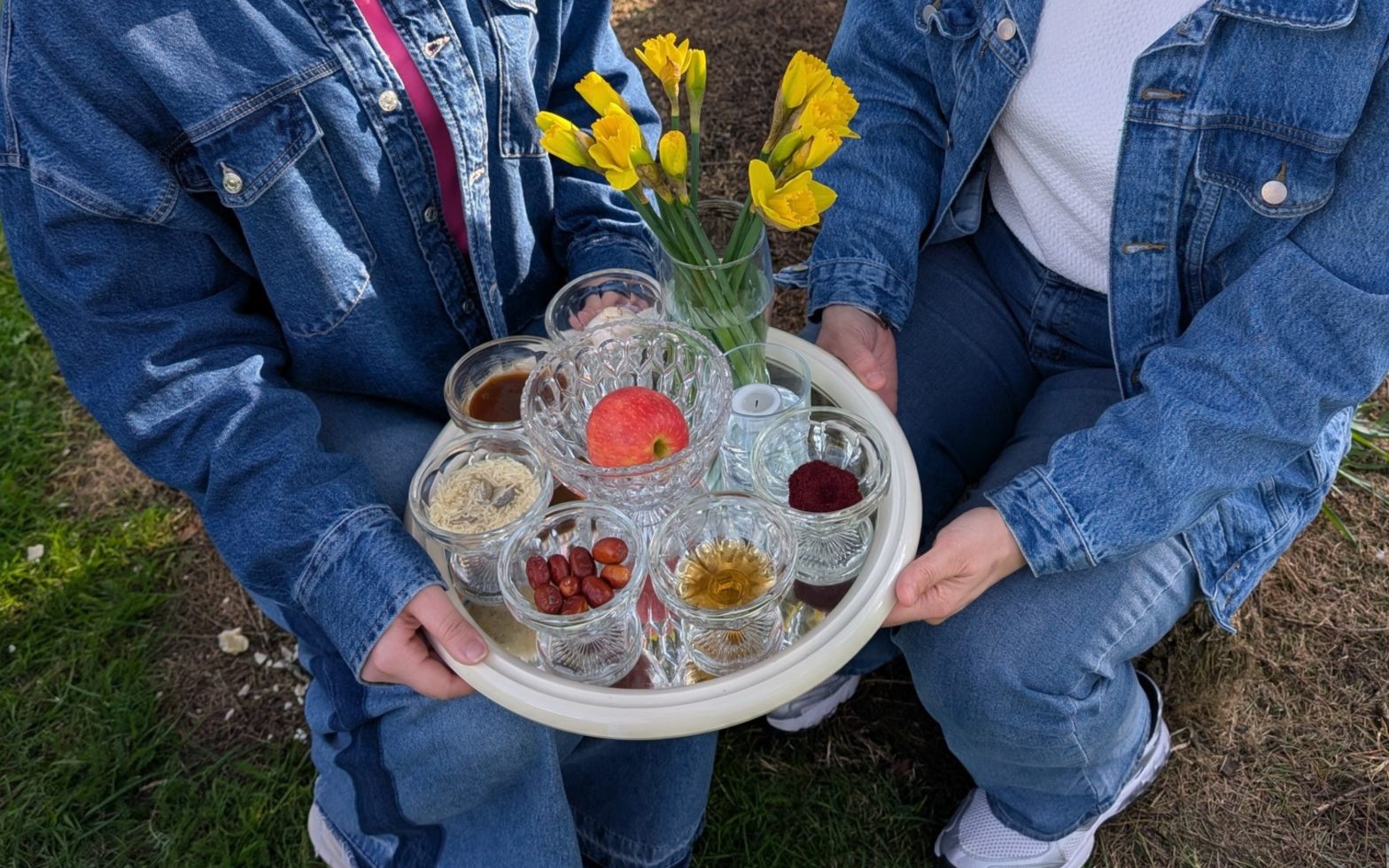
Pictured are two PERN members, mother and daughter, displaying a beautifully presented Haft-Sin Nowruz table. The Haft-Sin table is a traditional and symbolic table for Nowruz, laid out with 7 (haft) plates starting with the letter “S”. This table symbolises the New Year. The meaning of the plates on the Haft-Sin table is as follows:
- Sabzeh (sprouting bean): Symbol of freshness, renewal, and the connection between human and nature.
- Samno (wheat germ): Symbol of power, blessing, and sustenance.
- Sanjad (wild olive): Symbol of wisdom, and love encouraging thoughtful actions in the year ahead.
- Sib (apple): Symbol of health, beauty, and well-being.
- Serca (vinegar): Symbol for patience and acceptance, reminding us to embrace life’s challenges.
- Sir (garlic): Symbol of disinfection, body health, and warding off the evil eye.
- Sumac (spice): Represents of the spice of life and the transition from darkness to light, signifying hope and endurance.
A mirror and a candlestick may be placed by the table. The mirror to encourage self-reflection and the candle representing enlightenment.